The Ecstatic Foot
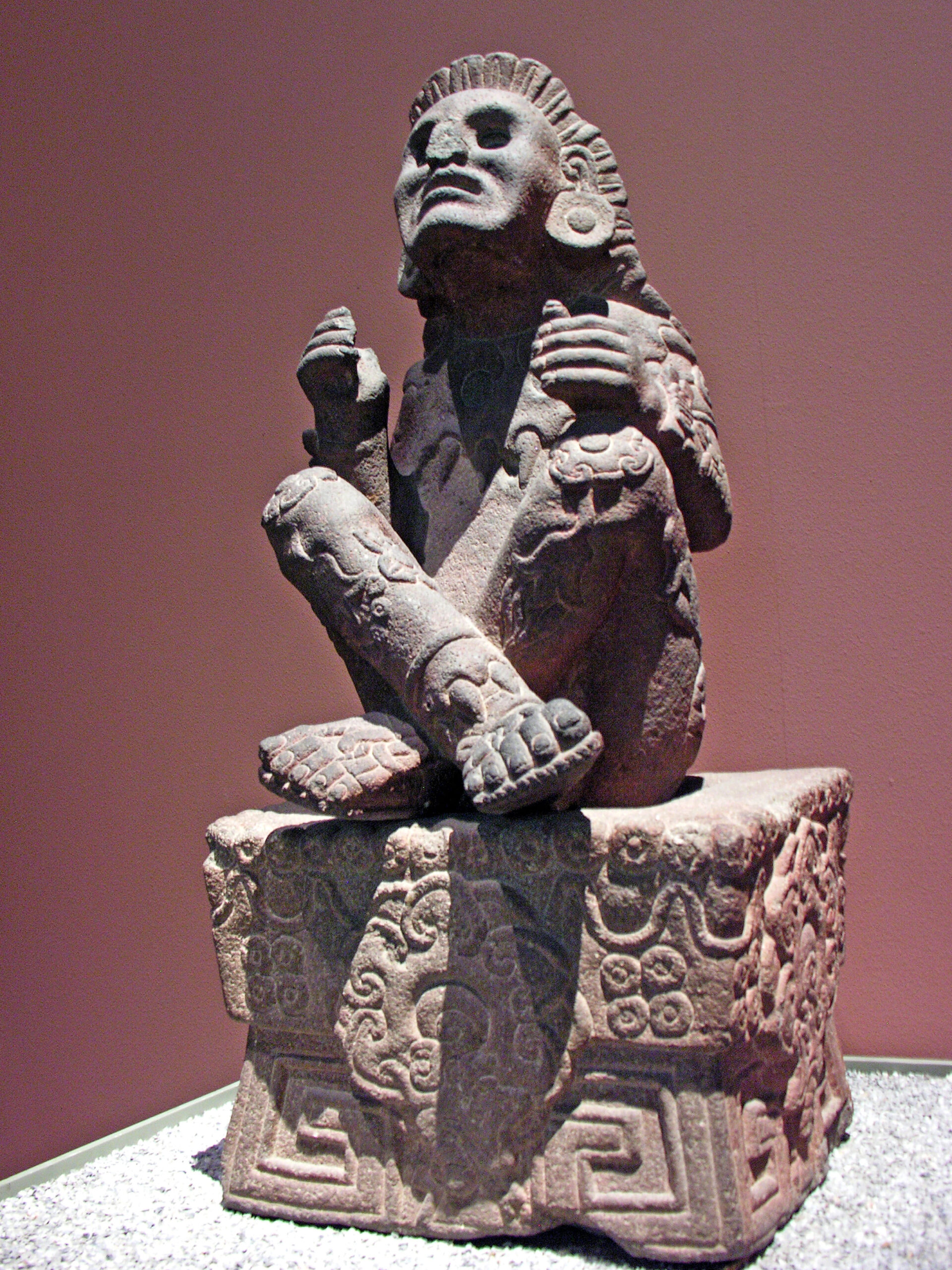
“[E]cstasy in this statue is of the essence. The skyward tilt of the head, the half-open mouth and jutting jaw, the hands poised in the air at different levels, the crossed legs and feet raised off the ground : here is the work of a master, a supreme carving of a man enjoying an unearthly experience, the formal, hieratic effigy of the God of ‘Flowers’, of the God of Rapture.”
This is Robert Gordon Wasson, the pioneering ethnomycologist, discussing the 16th-century Aztec statue of Xochipilli found near Tlalmanalco. Xochipilli is a god of dance, pleasure, play, music, poetry, gambling, beauty, feasting. Also sex. Also, gay men. His portfolio is extensive. And, perhaps especially, he’s a god of nature and flowers. Xochipilli translates literally to “Prince of Flowers.”
There are various “flowers” carved abundantly all over the body and pedestal of the statue. For Wasson, the statue’s ecstasy is a clue hiding in plain sight, one that should immediately prompt the investigator to ask what, exactly, all those flowers are.
Wasson, assisted by ethnobotanists (Richard Evans Schultes in particular), convincingly identifies the bulk of them, one by one, as members of a ritual pharmacopoeia: tobacco, sinicuichi and morning glory in various stages of flowering, the sacred mushroom Psilocybe aztecorum, and other plants associated with intoxication, divination and altered states. They are the evidence for his larger proposition that “flower” in Nahuatl poetry is not always referring to horticultural matters: Xochipilli is the prince of those flowers which cause one to see what ordinarily cannot be seen.
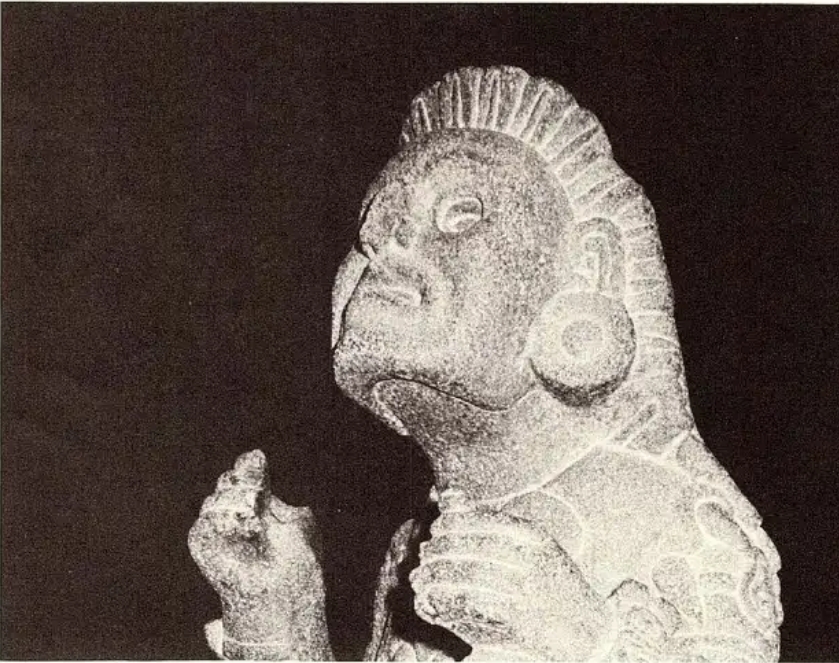
“If one looks into the eye-sockets or even more clearly under the chin, one observes that this man is wearing a mask […]. In the Xochipilli statue obviously the mask dramatically emphasizes the ecstatic man, and does so with the power of genius. Here is a man who is not seeing, not living as ordinary mortals see and live, who is seeing directly with the eyes of the soul. This man is not with us, is in a far off world.”
Justino Fernández, the prominent Mexican art historian and authority on pre-Columbian art, published the first detailed study of the statue in 1959. Wasson seems to have arrived at his own, very different interpretation around the same time: he recalls first studying Xochipilli in the late 1950s and recognizing the mushroom forms on its base “from the beginning,” though the botanical identifications that eventually supported his case were still to come.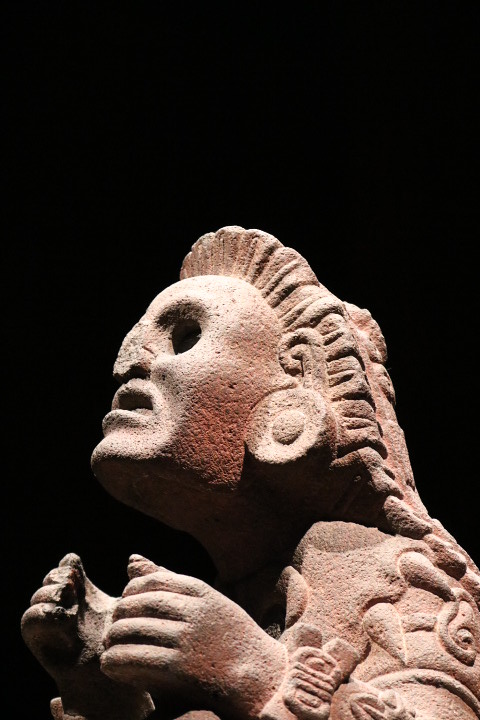
Fernández had himself noticed the figure’s unmistakable actitud de éxtasis (“attitude of ecstasy”). But he treated the carved flowers as mere ornament, failed to recognize the prominent mushroom motif on the statue’s base, and never considered whether the plants might explain the state he had so accurately described. He seems to have regarded the figure’s evident rapture as, at least in part, accidental, hypothesizing that the empty eye sockets originally contained precious stones that would have produced a different vibe altogether. This plainly exasperated Wasson. To him, Fernández had looked directly at the evidence and then somehow failed to take the obvious next step.
Wasson finally published his alternative reading in 1973, the year after Fernández’s death. When he later returned to the subject of Xochipilli at much greater length, he had become noticeably more animated about the whole business. Fernández, he now declared, had plainly “never enjoyed the experience of the entheogens, had never even given the role of entheogens in Mesoamerican culture serious thought.” Otherwise, how could he have missed what was sitting right in front of him? It’s clear, for Wasson, that Xochipilli is “listening to the far-off voices of sinicuichi” (Heimia salicifolia, known to produce auditory effects such as distant voices and ringing sounds).
This was years later, when Wasson expanded and recapitulated this argument for his 1980 book The Wondrous Mushroom: Mycolatry in Mesoamerica.

But by this time, Margaret Seeler, his illustrator for the original article, had gone to Mexico City to study the statue afresh. It was she who called Wasson’s attention to the figure’s ecstatically curled big toe.
“The pre-Conquest sculptor spoke alone to her, the artist, across a chasm of half a millennium.” Now his description becomes:
“The skyward tilt of the head and eyes, tense half-open mouth, jutting jaw, hands poised at different levels, crossed legs with feet almost wholly off the ground, the strain expressed by the retraction of the right big toe — they are all of a piece.”
Wasson was so tickled by this detail that he apparently asked Seeler to draw what can only be described as a “control” foot, shown next to Xochipilli’s for comparative purposes (Fig. 2b).
Elsewhere throughout the chapter, Seeler’s meticulous drawings serve to isolate and reproduce the statue’s carvings for close examination. Alongside them she supplies spectacular botanical studies of the plants Wasson and his collaborators believe they represent — sometimes depicting several stages in a plant’s life cycle so that particular buds, flowers, and other forms can be compared directly with their sculpted counterparts. The result is a kind of visual dossier assembled in support of Wasson’s interpretation.
In Figure 2, with an exemplar “normal foot” presented for the benefit of any unconvinced reader, the same method reaches its logical extreme. It’s hard not to be charmed by this. The comparison is wonderfully earnest. The ecstatic toe is not merely noticed: it is isolated, illustrated, supplied with a sober counterpart, and entered into evidence. I like to imagine the back-and-forth between Wasson and Seeler over this addition.

For the insatiable seeker of ecstatic pre-Columbian toes, we have an even more obvious parallel in this writhing 14th-century Taíno duho, a ceremonial object that probably functioned as a seat or platter. The Taíno inhabited much of the Caribbean, particularly the Greater Antilles. These two sculptures are culturally unrelated, but both artists are incorporating the extremities as a way of showing a transcendent state overtaking the body, of locating the mystical in the meat.
The crazy legs make use of the natural angles of the guaiacum wood from which the figure was carved. The figure is thought to suggest the ecstatic state associated with consumption of cohoba, a hallucinogenic snuff used by Taíno ritual specialists to communicate with deities and ancestral spirits.
The involuntary, then, becomes a kind of evidence for the invisible. Here we have clenched fists, gaping mouth and wide eyes, with legs akimbo. And conspicuously curled toes. The toe is a privileged site of involuntariness.
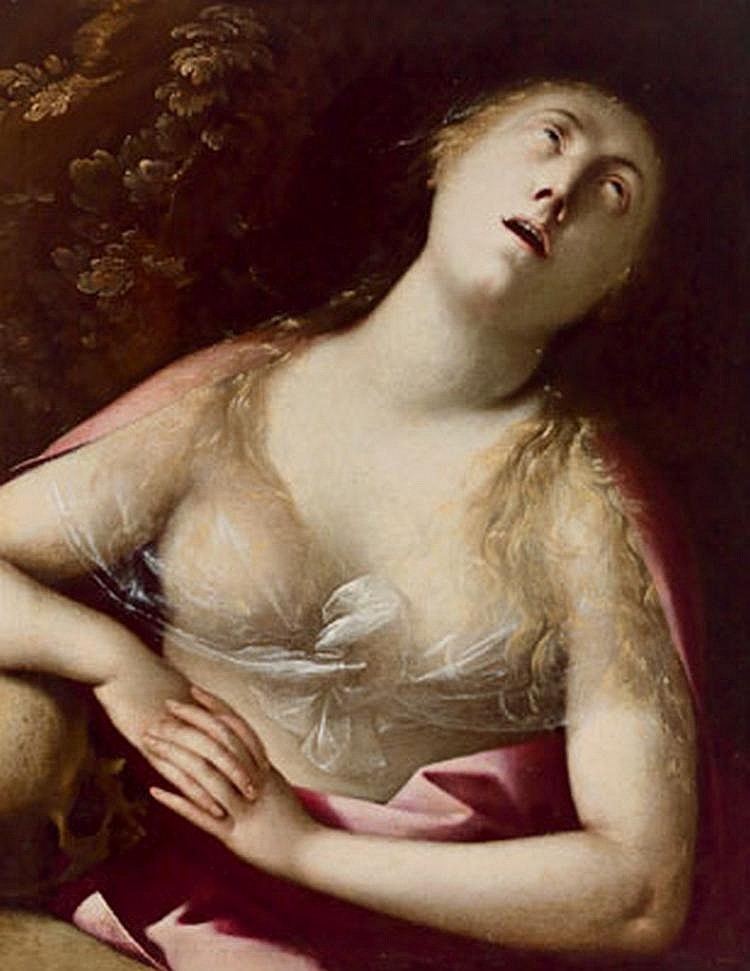
So it seems that invisible experience becomes legible when the body loses control of itself. This is where many Christian portrayals of ecstasy seem to lose the plot. Many use the conceit of the iconographic pose and are stylized into bloodlessness. These can be dismissed immediately. Placid eyes raised heavenward, mouth parted, hands spread: we know the vocabulary and can manufacture it on command. But the weirdly clenched foot is beneath conscious dignity.
We may communicate ecstasy through an established repertoire of devotional gestures, but these often fail to suggest that the body is actually subject to it. Bernini, famously, is unusually bold in his willingness to approach the frankly erotic to achieve his effect. And once again, the rapture makes it all the way to the extremities. His Teresa has generated centuries of knowing remarks because the distinction between mystical and sexual ecstasy has become almost impossible to police. Teresa describes the angel thrusting a golden spear into her heart repeatedly, leaving her “all on fire with a great love of God”; Bernini sculpted accordingly.
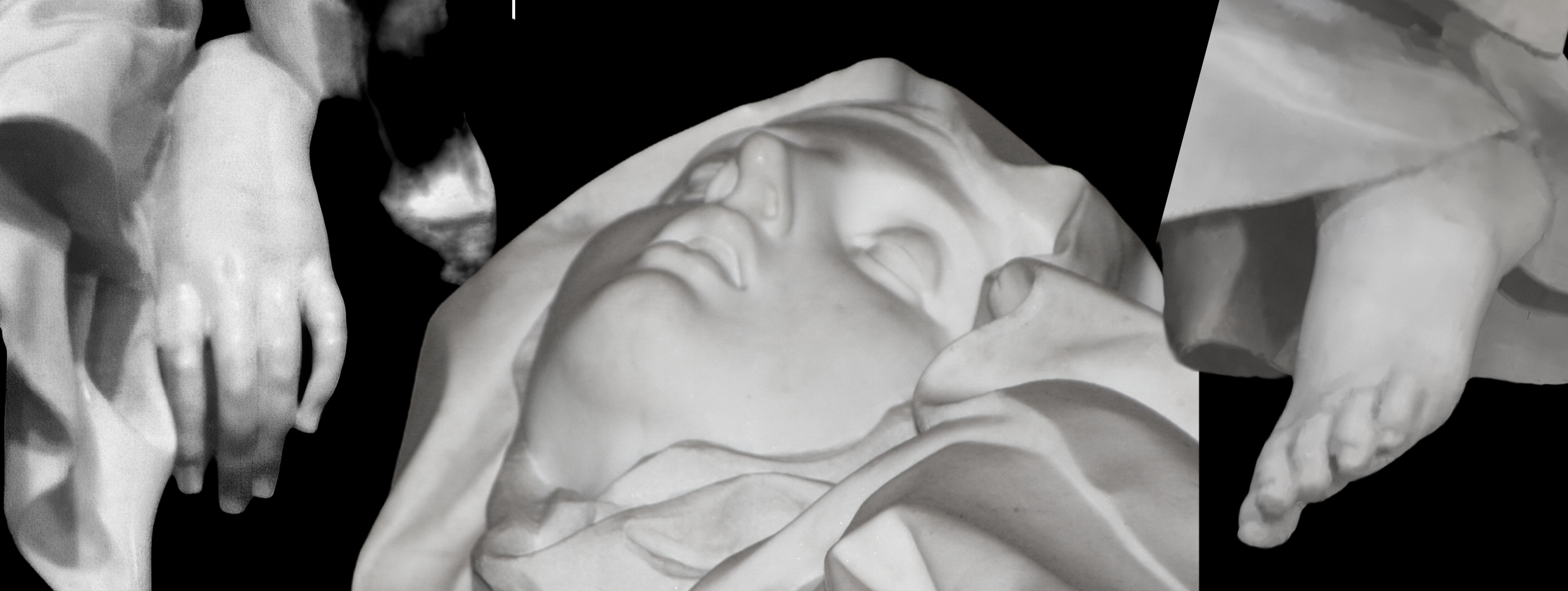
Ecstasy is ex stasis: the state of being outside (oneself). The Christian portrayals that succeed go beyond the blandly beatific and risk indecorum by showing a loss of composure. By showing dispossession. Eyes bulge and roll, limbs contort — the gaze is not upward but through, to the unfathomable. If you encountered such a person in the midst of this rapture you would be afraid. You night run the other way. These seem to, at least, capture the tremendum half of the ambivalent mysterium, the dread half of the Janus-faced experience of awe. It lends these works some feeling of truthiness; they’re more convincing as representations of an encounter whose magnitude exceeds the body’s ability to maintain decorum. Bernini gives us the duality with unusual completeness: pleasure and terror, penetration and transcendence, body and spirit.
(There is an entire subsidiary inquiry to be made into Christianity’s doctrinal foot fetish, but this is already getting out of hand. Just remember that when you visit the Cornaro Chapel, Teresa’s bare foot in ecstatic flexion is the bit closest to eye level.)
So by a route considerably longer than Wasson’s, I arrive back at Xochipilli’s big toe. I wonder if all this would have strangely delighted Georges Bataille, for whom the big toe is the obscene engineering secret of human transcendence. Man differs from the other apes by standing erect; he therefore acquires the magnificent vertical architecture upon which he builds an equally vertical metaphysics. At the top is the head: thought, light, heaven, reason, God. At the bottom is the foot: sweat, dirt, corns, fungal infections, mud. The shameful and disgusting big toe is what gives the “firm foundation to the erection of which man is so proud.” The head can aspire toward heaven only because the big toe is pushing against filth.
Humanity consequently despises the foot, says Bataille, with the peculiar violence reserved for those upon whom one is embarrassingly dependent. We have constructed civilization by standing upon our toes and then spent civilization pretending we don’t have toes. The face can perform transcendence. The toe has no reputation to maintain. But Xochipilli’s big toe does not drag the ecstatic man back to earth. Xochipilli’s toe is not the objection to rapture but its corroborating witness.